
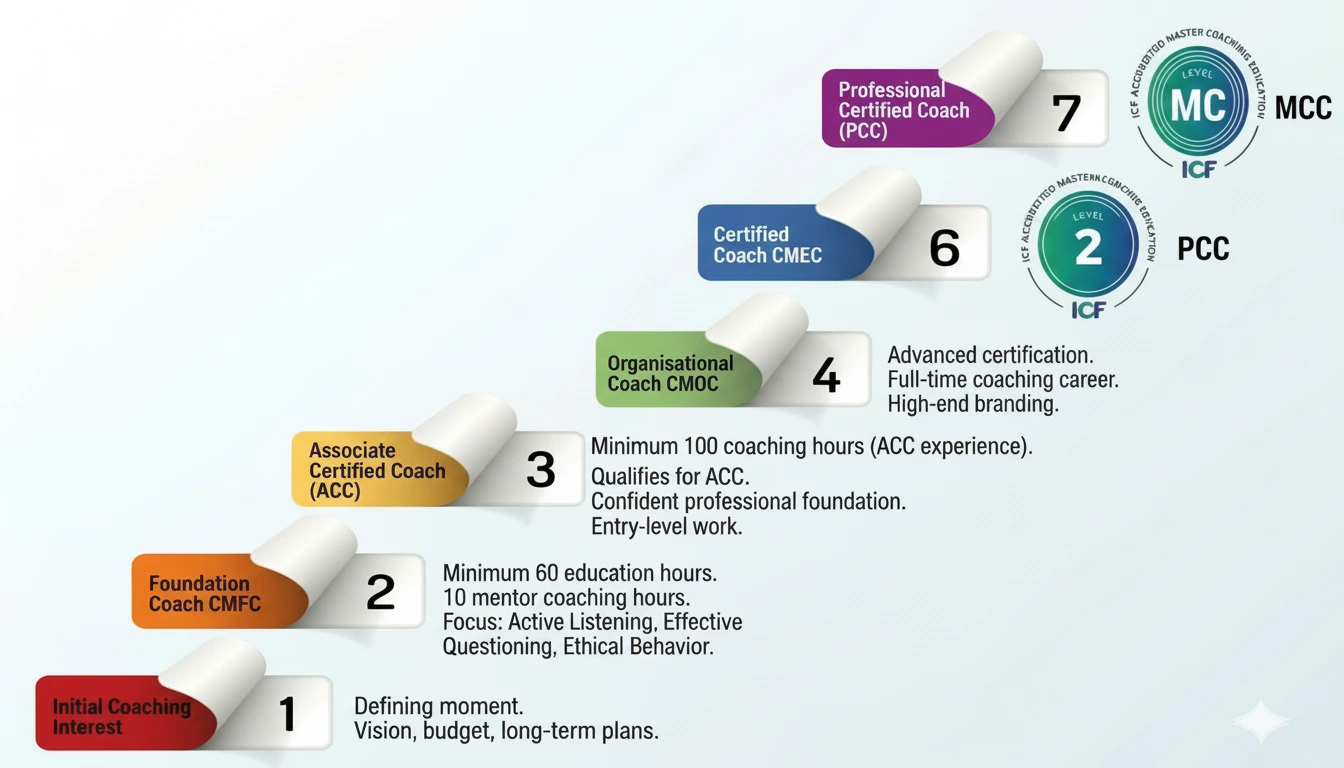
Whether to pursue an ICF Level 1 coaching certification or an ICF Level 2 coaching certification is one of the most defining moments for those who aspire to become coaches. What is ICF Level 1 coaching versus ICF Level 2 coaching will enable you to make the right choice based on your vision for your career, your budget, and your long-term plans. While Level 1 coaching is more geared towards those who are seeking ACC certification, Level 2 coaching is more geared towards those who are seeking PCC certification. The level of education, exposure to mentor coaching, and performance assessment criteria are vastly different between the two.
Understanding the ICF Credentialing Structure
It is important to have a clear understanding of the credentialing process that is offered by the International Coaching Federation (ICF) before selecting a coaching program, particularly when considering ICF Level 1 vs Level 2 coaching programs. The International Coaching Federation offers three different credentials, which are Associate Certified Coach (ACC), Professional Certified Coach (PCC), and Master Certified Coach (MCC). These credentials are achieved by completing the ICF training options, which include education, mentor coaching, and coaching experience via structured ICF training options. Level 1 programs are recognized for the achievement of the ACC credential, while Level 2 programs are recognized for the achievement of the PCC credential, which is the basis for ICF Level 1 vs Level 2 coaching options. All credentialing options include performance evaluations and a credentialing exam via approved ICF training options, which is a key consideration in any ICF coaching levels comparison.
In addition to education hours, another consideration is the completion of a certain number of approved coaching experience hours prior to applying for the credential of choice via official ICF training options. For ACC, this requires a minimum of 100 coaching hours, while PCC requires a minimum of 500 hours of coaching experience, which is a direct consideration in the ICF credential ACC vs PCC choice. MCC, which is the highest credential, requires 2,500 hours with advanced evaluation requirements. Each level is a progressive level of mastery, maturity, and effectiveness as a coach, which illustrates the difference between ICF coaching levels. It is important to have a clear understanding of the progressive requirements and the difference between ICF coaching levels to select a program that not only meets your current certification requirements but also helps in your long-term development via ICF training options and informed ICF coaching levels comparison.
Besides the requirements, the credentialing process also focuses on ethics and basic coaching competencies in formal ICF training programs. The candidates are expected to be able to demonstrate their competence in coaching in terms of professional guidelines, not only for fulfilling coursework, which is a key part of understanding ICF Level 1 vs Level 2 coaching requirements. The recorded calls for coaching are assessed to ensure they fulfill the requirements of the competencies, and mentor coaching is a crucial part of developing competencies in recognized ICF training programs. The process is intentionally made difficult to ensure the integrity of the profession and the international standards, which is often pointed out in any in-depth comparison of ICF coaching levels. By understanding the integration of education, mentor coaching, experience, and evaluation, and also understanding the ICF credential ACC vs PCC, you can select a program that will assist you in your long-term professional integrity and make an informed ICF Level 1 vs Level 2 coaching choice.
What Is an ICF Level 1 Coaching Program?
An ICF Level 1 Coaching Program is a systematic certification process for new entrants in their professional coaching career. It involves a minimum of 60 hours of coach-specific education, 10 hours of mentor coaching, and a performance evaluation in line with ICF standards. The course of study meets the requirements for the Associate Certified Coach (ACC) credential and is based on approved ICF training models that integrate education, mentor coaching, and evaluation in a streamlined fashion.
Level 1 coaching programs focus on fundamental coaching skills such as active listening, effective questioning, ethical behavior, client agreements, and coaching presence. The course of study prepares students for the ICF Credentialing Exam. The course of study helps students prepare coaches to develop confidence, awareness of professional standards, and initiate the process of accumulating coaching experience hours.
This is a great option for those requiring a solid professional foundation, starting a coaching practice, or integrating coaching into an existing professional career in HR, leadership, consulting, or education. It provides credibility, systematic learning, and an easy entry point into the coaching profession that does not require the longer-term commitment necessary for more advanced Level 2 training.
Further, participants receive the benefit of systematic practice sessions, peer feedback, and guided reflection to enhance application of coaching models. The program fosters the development of a coaching mindset based on curiosity, accountability, and client-focused collaboration. Participants at the end of the training are expected to feel empowered to engage in professional coaching conversations with clarity and confidence. This foundational training not only builds skills but also gets the momentum started for continued professional development and future credentialing in the ICF system.
What Is an ICF Level 2 Coaching Program?
A Level 2 ICF Coaching Program is an advanced certification option for coaches who seek to build a long-term coaching career. This coaching program consists of at least 125 hours of coach-specific education, 10 hours of mentor coaching, and a challenging performance review that satisfies the Professional Certified Coach (PCC) requirements. Unlike Level 1, Level 2 programs combine both foundational and advanced skills into formal ICF training programs to qualify coaches for advanced levels of certification.
Level 2 coaching programs explore more advanced topics in coaching mastery, including advanced uses of fundamental coaching skills, development of a coaching mindset, emotional intelligence, systems thinking, and handling complex client situations. Coaches enhance their skills to effectively facilitate transformational conversations, overcome resistance, and achieve client outcomes. The program also prepares candidates for the ICF Credentialing Exam and ensures they qualify for the PCC educational requirement.
This certification option is best for those who aim to build a full-time coaching career, engage in executive or corporate coaching, or build a high-end coaching brand. Even though this option demands more investment of time and money, Level 2 coaching certification offers higher market recognition and long-term coaching industry scalability.
In addition, Level 2 programs often include deeper feedback cycles, observed coaching sessions, and structured reflection practices that accelerate professional maturity. Participants receive detailed mentor evaluations that help refine their coaching presence, questioning depth, and client partnership skills. This intensive learning environment builds confidence in handling high-stakes conversations, leadership challenges, and organizational dynamics. Over time, this advanced preparation strengthens credibility, supports premium pricing, and positions coaches to compete effectively in global and corporate coaching markets.
Key Differences Between Level 1 and Level 2 Programs
If you are struggling with whether to take the Level 1 or Level 2 certification courses for coaches, the first big heads up would be the time commitment. Level 1 is packed with at least 60 hours of coaching training, but Level 2 takes it to the next level with an impressive 125 hours of training. That is a whole lot of extra time to spend on training and preparing you to take on the world.
As far as the credentials are concerned, Level 1 is right on target for the Associate Certified Coach (ACC) credential. However, Level 2 will also meet the requirements for the Professional Certified Coach (PCC) credential, which is “experienced pro” to me!
The experience of the training also shifts. Level 1 teaches you the basics of really listening, being ethical, and structuring a coaching session. However, Level 2 takes it to the next level with advanced skills, challenging real-world client scenarios, developed self-awareness, and that “coaching presence” that people are drawn to.
And then there is the career implications. Level 1 gets you your foot in the door for entry-level work, but Level 2 prepares you for high-level work such as executive or corporate coaching, which comes with higher pay and long-term staying power.
Another consideration is confidence. With Level 1, you develop your clarity on structure and process, which is crucial in the early stages of your coaching career. However, with Level 2, you develop a much higher level of adaptability and depth, which enables you to deal with complex personalities, leadership issues, and organizational issues with ease. The extra practice, mentoring, and performance feedback in Level 2 often leads to better market positioning. The reality is that the decision is not simply about hours or credentials—it is about how prepared you want to feel as you enter into increasingly challenging coaching conversations.
Career Impact: Which Level Supports Your Long-Term Goals?
When weighing the options of Level 1 and Level 2, it may be beneficial to consider not only the certification process but also where you see your coaching future in the years to come. Level 1 is typically the most effective way to enter the coaching world or add to an already established career in human resources, leadership, or consulting. It establishes credibility and allows you to confidently begin working with clients professionally.
Level 2, on the other hand, is intended for those with more substantial goals. If your aim is to coach executives, work with organizations, or establish yourself as a high-end service provider, the deeper level of coaching training is a significant benefit. Many business clients and large-scale organizations require or prefer to work with PCC-level coaches for leadership and executive coaching.
From a more tangible perspective, Level 1 is intended to get you started in the industry. Level 2 will allow you to compete at a higher level within it. Your choice should not only be based on your current position but also your position in three to five years.
It is also important to consider the type of impact you wish to make. Do you see yourself working with clients to facilitate personal development or working with leaders to facilitate strategic discussions at the executive level? Level 1 is intended to facilitate foundational impact, while Level 2 is intended to facilitate impact at a more complex level.
Investment and Return: Is Level 2 Worth the Extra Commitment?
Cost is also a consideration in making a decision between Level 1 and Level 2 programs. Of course, Level 2 is going to cost more because it encompasses more hours of training, more in-depth mentor coaching, and more sophisticated performance analysis. It also demands more of your time, attention, and practice. For many would-be coaches, Level 1 may be more budget-friendly and doable at the start of their career.
But it is necessary to assess this choice from a long-term perspective, not a short-term one. If your aim is to become a PCC-certified coach in the long run, you may want to begin with Level 2 to avoid further training down the line. More senior coaches tend to charge higher rates, attract big business contracts, and win long-term deals that can greatly boost your earning capacity.
The bottom line is not which program is more budget-friendly at the moment, but which one can better position you in the long run and boost your future earnings. Sometimes, a bigger upfront investment can lead to bigger payoffs down the line.
Start Your Professional Coaching Journey Today
Still deciding between ICF Level 1 and Level 2 coaching programs? Explore globally recognized coaching certifications and choose the right path for your coaching career.
How to Decide: Choosing the Right Path for You
To ensure you make the best choice between Level 1 and Level 2, it all starts with honesty with yourself. Ask yourself these questions: “Am I just testing the waters in the world of coaching, or am I all in on making coaching my lifelong career?” If you are still undecided, Level 1 coaching is a legitimate way in that doesn’t come with the same financial and time investment. It will give you the opportunity to get hands-on experience, build confidence with actual clients, and determine if coaching is something you are truly passionate about and want to make your lifelong career out of.
If you are already sure that coaching is what you want to make your lifelong career, then Level 2 coaching is probably the better choice for you. It will put you in advanced certification, give you a better status in the industry, and eliminate the need for future upgrades. Consider your target market as well. Do you want to help people with personal development, or do you want to help leaders, executives, and organizations?
Consider your own level of commitment and intensity as well. Level 2 coaching requires a higher level of practice, feedback, and performance. If you are ready to take yourself to the next level and make a lifelong commitment to mastery, then the challenge can be an incredible catalyst for your own personal growth.
Common Misconceptions About Level 1 and Level 2 Programs
Many aspiring coaches feel that Level 1 is somehow “less valuable” than Level 2, but this is just not the case. Level 1 is a respected and recognized pathway that meets ACC standards and offers a sound and credible foundation. It is not a “lesser” certification, it’s just a different level of certification that meets the needs of a different level of experience.
Another misconception is that success is somehow guaranteed once Level 2 is attained. While advanced training is certainly a plus that will enhance your skills and positioning, the development of a successful coaching practice still requires business development, networking, trust, and results. Credentials are a plus, but they cannot substitute for visibility, referrals, and professional relationships.
Finally, some coaches feel that it is somehow more difficult to advance later on. The truth is that many professionals start with Level 1, learn and gain clarity through experience, and then move on to Level 2 when they are ready for advanced training and opportunities. The process is designed to support growth, not limit it.
It is also important to recognize that both levels of certification focus on the same key competencies outlined in global coaching standards. The difference is one of depth and focus, not validity.
Read More – Understanding ICF Coaching Credentials: ACC, PCC, and MCC Explained
Final Thoughts: Making a Confident, Future-Focused Decision
Ultimately, the decision between Level 1 and Level 2 coaching comes down to alignment. Both will be accepted on the global platform, both will allow you to learn actual coaching skills, and both can be a stepping stone to professional coaching. The difference between the two is the level of learning, how you want to position yourself in the market, and the strategy you use to ensure long-term growth. If you are looking for a systematic and manageable entry point into coaching with the ability to expand later, Level 1 is a sound and legitimate place to start. If you are looking to build a full-time coaching business, work with corporations, or position yourself at a premium level, Level 2 has greater long-term strategic power.
Rather than trying to figure out which is the “better” option, it is more important to look at which one aligns with your current level of readiness and future ambitions. The best option will lead to sustainable growth, development of your expertise, and bring you closer to the impact you want to make in your coaching career.
It is also important to consider your learning style and capacity for commitment. Some people are best suited for a gradual approach, while others can handle and benefit from an immersive experience. When you choose what you want based on your ambition and level of readiness, you put yourself in a position to not only be certified, but to achieve lasting success.