


Employees are not used to being graded on their work as a chance to get better and learn from other people. As a manager, all people had to do was rate workers and fill out forms. Performance evaluation didn’t have to have anything useful to improve the work quality.
This outdated approach no longer helps anyone, businesses, or employees. As the industry evolves, employees want to improve their performance and be appreciated in their performance evaluation. Moving from a rigid once-a-year review to a more modern, flexible system is a big change in how companies evaluate employee work. Organizations are realizing that to stay competitive, they must adopt a performance evaluation process that is fair, transparent, and geared toward development rather than punishment.
The Problems with Traditional Performance Evaluation
Recency and Halo Effect Bias
One of the biggest flaws in old-fashioned performance evaluations is bias. Managers often rely on the most recent events—known as the recency effect—when rating employees. For example, an employee who made a mistake last week might receive a poor review despite consistent success earlier in the year. This effect is called recency, where you remember their recent work instead of rating them on the basis of their performance all year round.
This flawed system undermines the accuracy of the performance evaluation process, leaving employees frustrated and disengaged. When employees think they are being judged unfairly, they lose faith in their leaders and don’t want to put in as much effort, which has a direct effect on employee engagement.
The One-Sided Conversation
The way traditional performance evaluation works, it expects you to work tirelessly and take even unnecessary remarks from seniors/managers without a word, which makes it hard to want to improve. Without dialogue, the performance evaluation becomes a missed opportunity for coaching and collaboration.
When employees feel unheard, it weakens the manager-employee relationship and harms the chances of growth even when honest feedbacks are given. Performance evaluation should be given in a manner that is respectful for both parties.
Disconnection from Company Goals
Another limitation is that annual reviews are rarely aligned with organizational objectives. Business priorities can change quarter by quarter, yet employees only receive formal feedback once a year. By the time goals are reviewed, they may already be outdated.
This disconnect means employees often lack clarity about how their daily tasks tie into the company’s strategic direction. Without any certainty of an all-year-round performance evaluation and regular updates, even high-performing individuals can become uninterested, leading to wasted effort and reduced employee performance.
Defining the Modern Performance Evaluation Management Approach
In contrast, the modern system redefines what a performance evaluation process should achieve, instead of the older approach of manager-driven evaluation. The objective is transparency and accountability with due respect.
- Continuous Feedback: Instead of waiting 12 months, employees receive ongoing input through regular check-ins and coaching sessions. These frequent conversations create space for immediate corrections, skill-building, and recognition.
- Coaching Over Criticism: The modern performance evaluation process emphasizes coaching. Managers act less like judges and more like partners in development, helping employees in their improvement, overcoming challenges, and learning new things.
- Transparency and Fairness: Technology and structured frameworks now play a key role in making performance evaluations more objective. Fairness is introduced by having clear goals, regular feedback, peer support, and regular feedback.
- Alignment with Goals: Modern approaches ensure that employees’ objectives directly support organizational strategy. This clarity increases motivation and creates a stronger link between personal effort and business outcomes, driving employee engagement.
Empowerment Through Dialogue: Employees are encouraged to share their own reflections, set goals collaboratively, and participate in discussions to improve their growth journey, improving overall employee performance.
The Shift in Perspective
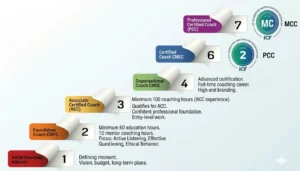
What makes the modern performance evaluation credentialing, like the ICF ACC and the ICF PCC, so powerful is its focus on unlocking potential. Instead of viewing the performance evaluation as a final verdict, it becomes an ongoing partnership. Companies that embrace this change see positive changes in the environment of the office; they see an increase in productivity and reduced turnover. Employees no longer fear the performance evaluation process—they see it as a tool for career development and a chance to contribute meaningfully to the company’s mission.
In essence, the shift is about moving from rigid judgment to continuous improvement, from isolation to engagement, and from outdated forms to real conversations. When companies get this right, they transform employee engagement into a competitive advantage, and it helps improve their productivity and focus.
The Modern Performance Evaluation Process Unpacked
The way companies measure and manage performance is changing a lot in today’s business world, where things change quickly. The old-fashioned annual performance evaluation is being replaced by a system that is open to everyone and puts empowerment, growth, and openness first. There’s more to this change than just a new way of doing things. It shows a new understanding of what motivates workers to be engaged and work hard in modern businesses.
The modern performance evaluation process recognizes that employees thrive when feedback is continuous, goals are clear, and regular two-way discussion on how to increase productivity helps employees to see opportunities and significantly enhances employee performance across all levels.
Continuous Performance Management vs. the Annual Review
Moving Beyond the Annual Review
For decades, companies have relied on annual performance evaluations to assess progress, determine promotions, and guide compensation decisions. Still, this important meeting feels more like a test than a real chance to move forward a lot of the time. Feedback delivered once a year is too little, too late—it fails to reflect real-time contributions and doesn’t allow employees to course-correct throughout the year.
Continuous performance management, on the other hand, is a fluid and ongoing performance evaluation process. It replaces formality with frequent, informal check-ins that encourage dialogue rather than dictation. Instead of employees waiting anxiously for their yearly review, they engage in monthly or quarterly conversations with managers to discuss progress, challenges, and development opportunities.
This modern system turns performance evaluation discussions into coaching moments. It allows employees to take ownership of their goals, seek support when needed, and receive recognition in real time.
Case Example: A Shift That Boosted Engagement
The story of a medium-sized IT company that switched from regular yearly reviews to regular performance evaluations and got their work quality improved after implementing a constructive feedback process into their system.
After adopting a continuous performance evaluation process, the company implemented bimonthly check-ins. They used computers to keep track of goals every two months and to record key conversations. Employee engagement increased by 40% and turnover decreased by 15% within a year, which is an incredible return on investment. People who worked there said they were happier with their jobs and knew what was expected of them.
This case study demonstrates how regular communication changes the culture of a company and motivates its employees to perform better.
360-Degree Feedback as a Standard Practice
A Holistic View of Performance
Modern organizations understand that no single person—especially a direct manager—can fully assess an employee’s contributions. That’s why 360-degree feedback has become an essential part of the modern performance evaluation process. This approach collects feedback from peers, subordinates, and supervisors in addition to top-down evaluations, resulting in a more comprehensive picture of performance.
A 360-degree performance evaluation encourages transparency and fairness. Workers gain knowledge about how various organizational levels view their conduct, collaboration, and leadership. Strengths and areas for improvement that might otherwise go overlooked in a traditional review are highlighted by this multifaceted feedback.
Benefits of 360-Degree Feedback
- Increased Objectivity: Since feedback comes from multiple sources, it reduces the bias often present in one-on-one reviews.
- Enhanced Self-Awareness: Employees gain a broader understanding of how their actions impact others.
- Better Collaboration: Teams that engage in mutual feedback grow more empathetic and accountable, which raises employee engagement levels all around.
- Better Development Plans: Managers can design more targeted training and development programs using insights from a diverse feedback pool.
Best Practices for Implementation
Structure and sensitivity are needed to use 360-degree feedback well. Here are key practices to ensure success:
- Ensure Anonymity: Confidentiality encourages an open, constructive, and safe environment for everyone, for any discussion or feedback.
- Provide Clear Guidelines: Teach participants how to provide precise, proper feedback to their juniors.
- Focus on Development, Not Judgment: The goal is to support growth, not to assign blame.
- Combine with ongoing coaching: 360-degree feedback works best when combined with ongoing conversations that make sure employees understand and act on the insights.
- Use Technology Wisely: Employ software that simplifies data collection and reporting while preserving privacy.
When executed well, this system turns performance evaluations into collaborative growth tools that strengthen both individuals and teams.
The Role of Technology in the Performance Evaluation Process
Technology has become an important aspect of the modern performance evaluation process. Digital tools, analytics, and AI-driven platforms have revolutionized how organizations track, analyze, and enhance employee performance. These systems get rid of the inefficiencies of writing things down by hand and make performance evaluation more accurate, consistent, and fair.
Automation and Efficiency
Recurring tasks like scheduling check-ins, documenting progress, and creating performance evaluation reports are automated by performance management software. This means that managers have more time to talk about important things instead of doing work. Even employees can get to dashboards that show them their progress and goals in real time. This makes them feel like they own their work and are in charge.
Automation ensures that feedback isn’t lost or forgotten—it’s documented and accessible, creating continuity in the performance evaluation cycle.
Centralized Feedback and Collaboration
Peers, subordinates, and managers can all give their feedback on a centralised platform, as is given in modern times. This constant flow of information helps ensure that no accomplishment is missed.
When feedback is visible and constructive, it promotes accountability and collaboration, directly boosting employee engagement. There are people who like being recognised, and when you do appreciate them, their work quality increases.
AI and Data-Driven Insights
Artificial Intelligence is transforming performance evaluations into data-driven decision-making tools. Algorithms can find skill gaps, look at patterns in performance, and even find unconscious bias in how managers evaluate performance. These insights help HR leaders design fairer and more personalized development plans.
For example, if data shows that an employee consistently exceeds goals in teamwork and innovation, managers can recommend leadership programs to help them grow further. But if performance metrics show that skills are lacking, then specific training can be given ahead of time.
The result? More objective performance evaluations, improved fairness, and stronger overall employee performance.
Removing Bias and Driving Fairness
Bias has long been a challenge in traditional performance evaluations, whether it’s favoritism, recency bias, or stereotypes. Technology helps solve this problem by making standards more consistent and giving us insights backed by data that show us where things aren’t working right. Businesses can make sure that assessments are fair for all roles and departments by using automated analytics to reduce the role of subjectivity.
The Future of Evaluation: Empowerment Through Insight
Modern performance evaluation is about more than just keeping tabs on performance; it’s about bringing out latent abilities. Through the integration of technology-driven analytics, holistic insight, and consistent feedback, companies can foster an environment where employees feel safe being themselves. Your employees now view criticism as an opportunity for growth rather than a form of criticism.
Businesses that adopt these subtal techniques give a vibrant workplace where staff members are inspired, valued, and want to contribute to company goals. This synergy between growth and accountability forms the backbone of sustained employee engagement and exceptional employee performance.
Ultimately, the modern performance evaluation is more than a process—it’s a mindset. That improves older beliefs and resources to a newer and better approach, where they can focus on improving themselves.
The Key to Unlocking Potential — Employee Engagement
In today’s fast-evolving corporate environment, employee engagement has emerged as one of the most powerful drivers of success. An engaged workforce is not just productive but also loyal, innovative, and aligned with organizational goals. A long time ago, the only way to judge an employee’s work was to see if they were meeting their goals. They are now considered a means to engage individuals and assist them in their personal development. Modern organizations understand that evaluating performance is not about fault-finding but about unlocking potential — and at the heart of this transformation lies the connection between performance evaluation, engagement, and development.
Performance as a Driver of Engagement
Today’s way of performance evaluation is much more than just giving points or ratings. It makes it clear how each person’s work affects the business as a whole. People who work for a company feel like they own it and have a purpose in life when they can see how the work they do every day impacts its success. This link makes workers more interested in both their own goals and the goals of the company. This makes them more engaged.
In traditional systems, feedback often came once a year, leaving employees uncertain about where they stood. Check-ins and conversations that focus on growth are now at the heart of continuous performance evaluation. Managers help their teams figure out what they do well, what they could do better, and what they need to do next to be the best at their jobs.
A coaching-based approach to performance evaluation transforms the workplace culture. Instead of judging employees, it nurtures them. When employees get feedback and praise on time, they are more likely to work hard because they know their progress is being seen and valued. Over time, this results in sustained employee performance and engagement — the true hallmarks of a thriving organization.
Setting Meaningful, Forward-Looking Goals
One of the most important parts of any performance evaluation is setting the goals. But the basic premise is not about seeing, it’s about setting an example of transparency, action, and direction.
Modern goal-setting frameworks like OKRs (Objectives and Key Results) and SMART goals (Specific, Measurable, Achievable, Relevant, and Time-bound) are increasingly being adopted because they shift the focus from outcomes alone to the journey of achieving, increasing the transparency, collaboration, and allowing teams to improve their objectives and organizational priorities. This alignment is not on performance, but it also makes them more motivated because they can see how their work fits into the bigger picture.
Team goals play a vital role in ensuring a competitive environment. When employees are involved in defining their targets, they take ownership of their performance. This participative approach transforms goals from being imposed expectations to shared commitments. During the performance evaluation process, managers, employees, and everyone else working can contribute to the performance evaluation, which can give birth to team improvement and enthusiasm.
When performance goals are meaningful and future-focused, employees are more likely to remain committed, creative, and proactive — all of which strengthen employee engagement and productivity.
The Psychology of Motivation and Recognition
At its core, employee engagement is deeply psychological. People crave acknowledgment, growth, and belonging. When organizations recognize achievements — both big and small — it sends a powerful signal that the individual matters. Recognition satisfies a fundamental human need and directly influences employee performance and retention.
Effective recognition is not just about annual awards or bonuses; it’s about consistent, genuine appreciation. Managers who deliver timely and specific feedback reinforce positive behaviors. For instance, acknowledging a specific contribution like “your data provides a clear sense of the product” can help one feel appreciated, rather than a generic comment like “good job”.
Both monetary and non-monetary rewards play vital roles. Financial incentives like bonuses, promotions, or performance-linked pay can motivate employees to achieve results. However, non-monetary recognition — such as public appreciation, career, offering flexible work hours, or chances to learn and grow often has a longer-lasting effect on how engaged employees are with their jobs.
To ensure recognition is consistent and equitable, the performance evaluation process can serve as a structured way. Organizations can make gratitude a regular habit instead of an afterthought. When employees feel appreciated, they reciprocate with loyalty and higher employee performance.
The Manager’s New Role: From Boss to Coach
One of the most transformative aspects of modern performance evaluation is the redefinition of the manager’s role. In addition to keeping an eye on tasks, managers now act as guides, teachers, and supporters for their workers. Their success now hinges on their ability to encourage and inspire their teams through genuine kindness, honesty, and trustworthiness.
Managers must establish psychological safety—a setting where staff members can freely exchange ideas, pose inquiries, and own up to their mistakes without worrying about being judged—in order to increase employee engagement. This trust forms the foundation of effective coaching conversations. Managers should investigate what can be improved and how, rather than just what went wrong.
Regular one-on-one meetings are essential tools in this coaching-based performance evaluation process. These meetings should cover topics such as skills, development, personal challenges, stress of the job, and other issues that are work-related. So that employees can share their work with their superiors. Effective one-on-ones can be conducted with the following tactical advice:
- Be consistent: Schedule regular sessions, not just when problems arise.
- As you listen, encourage your employees to be honest about their problems, challenges, and issues.
- Offer actionable feedback: Focus on specific behaviors and suggest clear next steps.
- Encourage development: Provide learning opportunities aligned with employees ‘ wishes related to work.
Managers help workers take charge of their own performance and growth when they switch from telling them what to do to helping them learn how to do it. Giving people more power makes them much more motivated and involved.
Bringing It All Together
In essence, employee engagement and performance evaluation are two sides of the same coin. A modern performance evaluation process not only measures outcomes but also gives the conditions that drive better results — clarity, recognition, growth, and trust. Businesses follow this idea change with their employees, not just evaluate them.
Businesses can make a place where workers can be emotionally and productively productive by using coaching, feedback, setting goals together, and showing appreciation. Not only do employees do a better job, but the organization as a whole is stronger and better able to handle change and achieve long-term success.
The future of work belongs to organizations that see their people not as resources to be managed but as potential to be given opportunities to give surprisingly good results. And it all begins with transforming the performance evaluation process into a genuine tool for engagement and empowerment.
Implementing a Modern Approach
Transitioning from a traditional evaluation system to a modern performance evaluation process is not simply about updating forms or software—it’s a cultural shift. A well-thought-out performance evaluation process can make employees more engaged, boost their performance, and ensure that their personal goals are in line with the organization’s vision. Companies that want to redesign their performance management system to make it more continuous, data-driven, and people-centered can use the steps below.
Step 1: Assess Your Current Procedures to Identify Gaps
Before implementing any new system, organizations must first evaluate what already exists. This means analyzing the current performance evaluation framework to identify its strengths, weaknesses, and areas of improvement. Do workers get feedback on a regular basis? Do organizational goals and individual performance have a clear relationship?
Conducting surveys, interviews, or focus groups can help gather insights from employees and managers. It’s possible that this feedback will show you what needs to be fixed, such as unclear performance metrics, a lack of openness, or not enough follow-up after reviews. To improve the amount of work that gets done or the drive of workers, it’s important to know what parts of the system don’t keep them interested.
Once these gaps are identified, organizations can prioritize areas that need redesigning, such as the feedback structure, frequency of reviews, or training for evaluators. The focus should be on creating a performance evaluation process that is agile, meaningful, and growth-oriented.
Step 2: Align the New Process with Company Goals and Culture
A modern performance evaluation process cannot succeed if it operates in isolation from the company’s values and strategic goals. The redesign has to fit with the organization’s goals, the way it makes decisions, and the way people like to work. A company that prioritizes innovation, for instance, should focus on evaluating risk-taking and creativity, whereas a customer-centric company should prioritize teamwork and service quality.
To achieve alignment, senior leaders and HR teams should define clear performance metrics linked to business outcomes. These may include goal achievement, behavioral competencies, or contribution to team success. Employee engagement and sense of purpose are increased when this alignment is maintained because it makes it evident how their roles fit into the overall goals of the company.
Moreover, the new performance evaluation process should promote fairness, transparency, and inclusivity. It should encourage conversations about development rather than just performance evaluation ratings. This cultural alignment ensures that the process becomes a natural extension of how the organization operates, rather than a once-a-year ritual.
Step 3: Create a Clear Communication Plan to Manage Change
Any change in the performance evaluation process can face resistance—especially if employees and managers are used to traditional annual reviews. A clear, well-structured communication plan is essential for gaining buy-in at every level.
Start by articulating the “why” behind the transformation. Explain how the new performance evaluation process will benefit both individuals and the organization—by offering continuous feedback, enhancing transparency, and creating more opportunities for growth. To raise awareness and answer inquiries, use a variety of communication platforms, including internal webinars, town halls, emails, and training sessions.
Equally important is listening to feedback throughout the transition. Employees should feel involved in shaping the process. Promoting open communication will help to build trust and lessen uncertainty, ensuring that the move to contemporary performance management improves employee engagement rather than creates misunderstandings.
Step 4: Train Managers for Modern Conversations
The success of any performance evaluation system depends heavily on managers. They are the bridge between organizational goals and employee development. However, many managers have never been trained in conducting constructive, empathetic, and bias-free performance discussions.
Training programs should therefore focus on helping managers master modern coaching and feedback techniques. They should learn how to conduct regular one-on-one conversations, provide actionable feedback, and set developmental goals collaboratively. Managers should also be equipped to handle sensitive discussions and recognize their unconscious biases—whether related to gender, age, background, or personality type.
Role-playing exercises, e-learning modules, and real-time coaching can be effective tools for developing these skills. When managers are confident and capable in leading performance conversations, employees feel more supported, increasing employee engagement and overall employee performance.
Addressing bias is particularly important. Research shows that unrecognized bias can distort performance evaluations, leading to disengagement and mistrust. Organizations can use data-driven tools, standardize review templates, and promote peer feedback as part of a 360-degree strategy to lessen this. These methods make the performance evaluation process more objective and inclusive.
Step 5: Measure the Success of Your New Approach
It is important to see how the new system affects people after it is put in place. The metrics can help you figure out if the new process is helping the worker. Common indicators include:
- Participation rates: How many employees and managers are actively engaging in ongoing reviews and feedback sessions?
- Rates of goal completion: Are employees meeting their objectives within the time limits that were set?
- Employee engagement scores: if employees are showing enthusiasm, connection, and focus.
- Performance evaluation trends: Is there an overall improvement in productivity and quality of output since the new system’s introduction?
The process should be improved by looking at the data from these metrics on a regular basis. If goal completion rates stay the same even though engagement scores go up, for example, the company may need to rethink how goals are set or supported. Continuous improvement makes sure that the system stays useful and effective.
Organizations should also use qualitative insights—like employee testimonials, manager feedback, and focus group discussions—to understand how the new performance evaluation process is influencing culture and morale.
Step 6: Iterate and Refine Over Time
Performance management is not a “set it and forget it” initiative. Systems for evaluating employee performance are dynamic frameworks that adapt to the needs of the most successful companies. The efficacy of the process is maintained through regular reviews that are informed by data and employee input.
Organizations can use emerging technologies, like sentiment analysis, AI-driven analytics, and automated feedback tools, to increase efficiency and objectivity. Being adaptable and receptive to change is crucial.
Companies can make sure that the performance evaluation process keeps boosting employee engagement and performance while adjusting to the new realities of the workplace by continuously improving it.
Conclusion: Unlocking Potential for a Thriving Future
The workplace and what employees are expected to do have changed a lot in the last ten years. A modern approach to performance management is no longer a “nice to have”—it is a necessity for companies that wish to attract, engage, and retain top talent. If companies focus on growth instead of strict evaluations, they not only help people reach their full potential but also set the stage for long-term business success.
Recap the Benefits
Throughout this discussion, it becomes clear that the benefits of a modernized performance management approach are far-reaching:
- Engaged workers: When employees understand how their work can give the company an advantage and contribute to its growth, they get more interested. Setting goals as a group, getting feedback all the time, and being recognized all help people participate more.
- Better Motivation: Both monetary and non-monetary fuels intrinsic and extrinsic motivation. Employees flourish when their contributions are recognized in a timely, targeted, and significant manner.
- You can make sure that everyone’s OKRs and SMART goals are both personal milestones and important to the company’s overall strategy with smart alignment. This alignment helps everyone in the organization understand what needs to be done and helps workers decide which tasks are the most important.
- Retention and Growth: Workers are more likely to stick with a company if they feel encouraged by coaching, opportunities for growth, and open performance evaluation procedures. They see their company as a partner in their career path rather than just an employer.
- Managerial Transformation: Managers move from being traditional evaluators to trusted coaches, building stronger relationships, fostering psychological safety, and unlocking performance through meaningful conversations.
These benefits create a ripple effect—when employees thrive, so does the business.
The Big Picture
Modern performance management is not simply an HR exercise carried out once or twice a year. It is a core business strategy that directly impacts innovation, customer satisfaction, and long-term profitability. Setting goals that look ahead, communicating clearly, and getting feedback all the time are things that companies do to make their culture flexible and strong.
The business world of today is always shifting and upsetting, so companies need workers who are interested, driven, and given the freedom to handle tough issues. A modern performance system ensures that teams remain aligned with strategy while giving individuals the tools and support they need to excel.
In essence, it transforms performance management from a backward-looking review into a forward-looking engine of growth—one that fuels both individual careers and organizational success.
Final Thought
The true strength of any organization lies in its people. Businesses can get the most out of their employees by letting them know when they’ve done a good job, helping them learn new skills, and making sure that their goals are in line with the business’s overall goals. There will be new ideas, consistent growth, and loyal customers as a result of this investment.
When we think about the future of work, the companies that will do well are the ones that don’t see performance evaluation management as a list but as a journey with their Workforce. Companies can get the most out of their employees at every level by giving them the tools they need, building trust, and encouraging growth.
The message is clear: when you invest in people, you invest in the future. That way, you can create a workplace that is not only more productive but also more human, inspiring, and strong.
FAQ
What are we offering?
We are offering expert coaches and facilitators who offer coaching, inspiring individuals, teams, and organizations to achieve their goals.
How to contact us?
Fill out a form on the BYLD Coaching website to experience a session.
Who will be coaching you?
400+ expert coaches and 20k managers as coaches, with 100% pass results.
What is the purpose of a performance evaluation?
To give structured feedback on an employee’s work and guide their professional development.
How often do performance reviews happen?
Reviews are often annual, but many companies use more frequent, regular check-ins.
How should I prepare for a performance review as an employee?
Document your achievements, review your goals, complete your self-assessment thoughtfully, and prepare questions for your manager.
What if I disagree with my performance review?
Politely ask for specific examples to understand the feedback, present factual evidence, and consider a follow-up meeting.